Simply using a customer's name isn't enough anymore. Sales reps need to dive deeper with hyper-personalisation. This approach doesn't just recognise a customer’s name; it digs into their unique needs and preferences at every point of interaction.
Let’s break down how you can implement this strategy to not just reach, but resonate with your target audience deeply.
What is hyper-personalisation?
Hyper-personalisation is a marketing approach that customises the customer experience by using detailed personal data. It examines individual preferences, behaviors and past purchases to make each interaction feel specially designed for each person.
Instead of using general templates like traditional marketing, hyper-personalisation uses detailed data to create highly specific and relevant messages, making every interaction deeply meaningful for each customer.
Personalisation vs hyper-personalisation
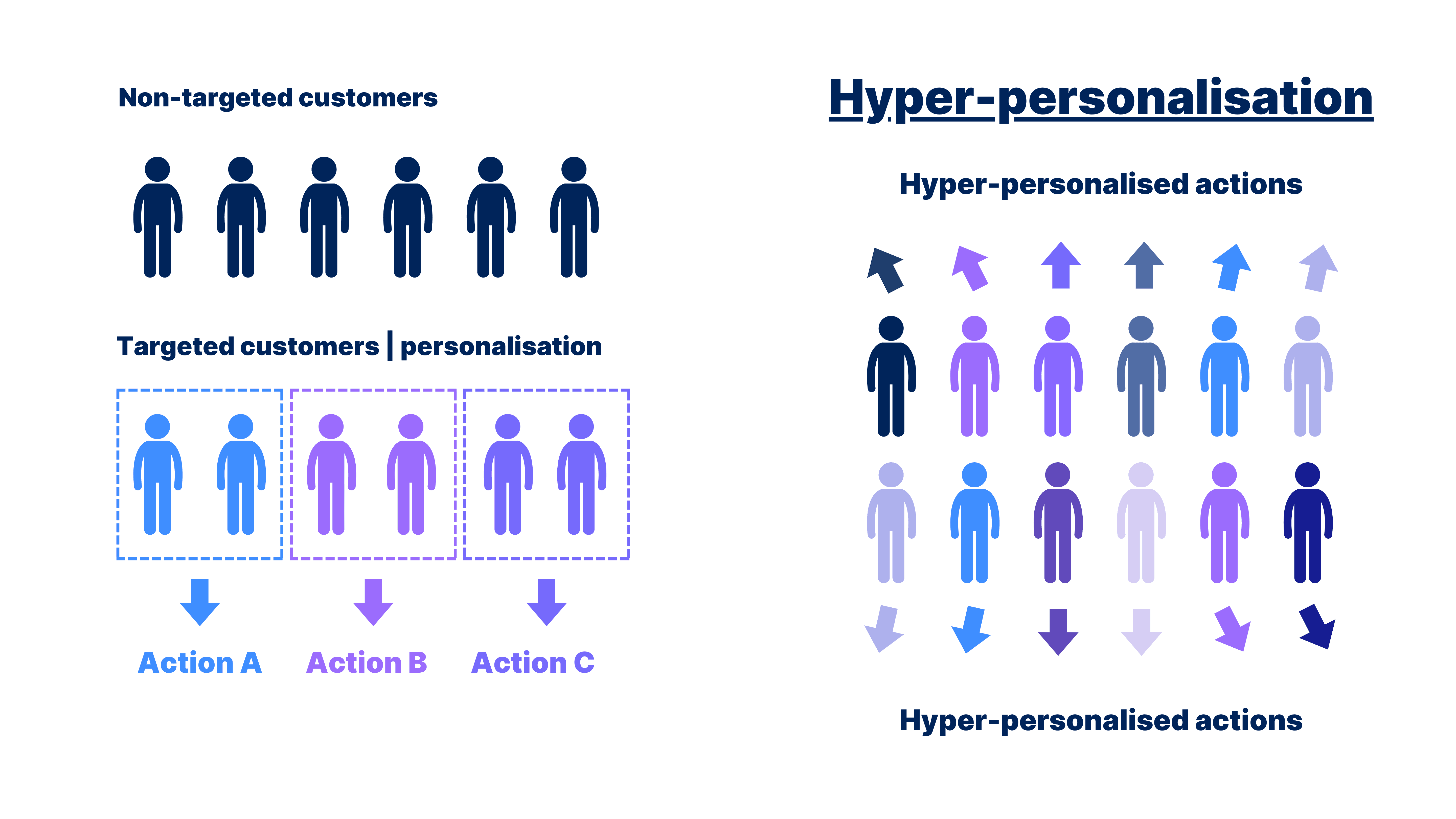
Traditional personalisation and hyper-personalisation both aim to customise marketing to individual customers, but they differ significantly in depth and technique.
Traditional personalisation might use basic information like a customer's name or past purchases to customise messages, which makes communications feel slightly more personal.
Hyper-personalisation, on the other hand, uses advanced data analysis and technologies like AI to dive deep into individual behavior patterns, preferences, and interaction history.
This approach crafts experiences that are not just personalised on the surface but are finely tuned to anticipate future needs and preferences, creating highly individualised interactions that enhance customer satisfaction and loyalty.
The role of technology in hyper-personalisation
Technology, especially artificial intelligence (AI) and machine learning (ML), plays a crucial role in making hyper-personalisation possible.
These technologies help businesses quickly analyse large amounts of data to understand and predict individual customer needs.
How AI and machine learning help
AI and machine learning can process information about customer behaviors, preferences, and past interactions automatically.
This allows businesses to create detailed profiles for each customer, which helps in customising marketing efforts specifically to their needs.
Technology examples
Customer data platforms (CDPs)
These platforms gather data from various sources to create a complete view of each customer, making the data easily accessible for marketing and sales.
Predictive analytics
These tools uses past data to predict future actions, such as which customers might stop using a service or who might respond to a specific offer.
Natural language processing (NLP)
NLP technology understands and generates human-like text, allowing for the creation of personalised messages that fit each customer’s context.
Dynamic content generation
These tools automatically adjust the content seen by a customer based on their latest interactions or preferences, ensuring relevance.
Advantages of hyper-personalisation
Enhanced customer engagement and responses
By customising content based on individual customer data, including past interactions and behaviors, customers feel more understood and valued. This increases the likelihood that they will engage with the content they receive, leading to stronger customer relationships.
Increased conversion rates and customer satisfaction
Customers are more likely to take action when they receive offers that closely match their needs, resulting in higher conversion rates and greater overall satisfaction.
Marketing efficiency and reduced waste
Traditional marketing strategies can lead to broad and sometimes inefficient outreach, wasting many resources on prospects with little to no interest. Hyper-personalisation helps marketing teams focus their efforts on the most promising prospects, leading to more efficient resource allocation and reduced waste.
Practical applications
In a separate blog post, we dive into practical tips for applying visual hyper-personalisation effectively across various marketing strategies.
Here, we'll briefly touch on some fundamental applications and hyper-personalisation examples to get you started.
Strategies for hyper-personalisation in email campaigns
Start by segmenting your email marketing list based on detailed customer data, such as buying behavior, interests and interaction history. Personalise the email content to address the recipient's specific needs and preferences. For example, if a segment of your list frequently purchases a particular type of product, customise your emails to highlight similar products or related offers.
Using personalised content and visuals
Go beyond text by using personalised visuals, such as images, infographics or videos that reflect the recipient's previous interactions with your brand. This can include visuals that are dynamically generated to feature products the customer has viewed but not purchased or graphics that are customised to the customer’s industry or role.
Examples of successful hyper-personalisation
One effective instance of hyper-personalisation can be seen in how some companies use customer activity data from their website to create customised email content. For example, if a customer has spent time on specific product pages, the subsequent marketing emails they receive could include detailed information, offers, or reviews related to those products. Another example is sending anniversary or birthday emails with special offers based on the customer’s previous purchases, increasing relevance and engagement.
Future trends
Hyper-personalisation in B2B marketing is evolving quickly, driven by smarter AI and machine learning. This means marketing can become more personalised in real time, adjusting instantly to each customer interaction based on the latest data.
Getting ready for these changes
Companies should invest in advanced technology like Bizzy, which provides real-time business insights and handles large data sets efficiently. It's crucial for marketing teams to learn how to use these kind of data platform tools effectively. Also, having a flexible marketing strategy that can quickly adapt to new technologies and market trends is key to staying ahead.
Let’s go!
Are you ready to dive into hyper-personalisation? Start by evaluating your current technology and data strategies. Consider how you can gather more detailed customer insights and use this information to create targeted, personalised sales outreach. Begin small, measure your results, and scale based on success. Good luck!