Ask where to find contact details for Belgian company decision-makers and the answer you will usually get is "the KBO" or "the Official Gazette". Both are correct and both answer a slightly different question than the one you asked.
The register tells you who holds a mandate. Whether that person decides anything about what you sell is a separate matter, and in a Belgian SME the answer changes sharply with size.
What the register actually gives you
Directors, managers and their appointment dates are published in the Annexes to the Belgian Official Gazette and carried on the company's register entry. That is genuinely valuable, and free, but note what it is:
It is a legal role, not a functional one. A zaakvoerder is whoever the articles say it is.
It is frequently a holding or management company, not a natural person, common in Belgian structures and a dead end for outreach.
It is current as of the last publication, which may be years old.
It contains no email address and no direct line for that person.
The register also publishes the company's own registered phone, e-mail and website where the company entered them, unlike the Dutch register. That is a switchboard, not a person.
Where mandate and decision diverge
A rough rule that holds well in Belgium:
Company size | Who actually decides |
1–10 staff | The director, genuinely. Mandate and decision are the same person |
10–50 staff | The director still signs, but a functional owner now exists and shapes the choice |
50–200 staff | A department head decides; the director hears about it |
200+ | A committee, and the director is irrelevant to your deal |
So the register is an excellent contact source for the smallest companies and an increasingly misleading one as size rises, which matters because 997,481 of Belgium's 1,187,819 enterprises have no employees at all, and the band where the director really is the buyer is large.
Check the filed headcount before deciding whether the director is your contact. It is the cheapest disambiguation available.
Getting from company to person
Start with the function, not the name. Decide which role owns the problem you solve (finance, operations, HR, IT) before you look at any individual. Searching for "the decision-maker" produces the managing director by default, which is the wrong answer above about fifty staff.
Use seniority and department as filters, not as a sort. In Bizzy contacts carry title, department and seniority, and the target personas you care about are configurable, so the same search returns the operations lead at one company and the plant manager at another, rather than a list of MDs.
Check recency before you check the address. A contact record carries a "last found" date, and per-channel indicators for email, phone and LinkedIn. An undated contact is a guess. Email and phone numbers in Bizzy are validated through providers including Prospeo.
Cross-read the register for the ones that matter. For a small company, confirming the director against the published mandate takes a minute and stops you addressing someone who left in 2023.
The trap worth naming
Contact data decays far faster than company data, and in the opposite way.
A company fact is published. When a Belgian company changes its registered office or appoints a director, that appears in the Official Gazette with a date. The register tells you. A person changing jobs is published nowhere on a schedule. Nothing tells you. The record simply stops being true, silently.
That asymmetry is why a contact without a recency date is worth very little, and why the job-change signal is useful in both directions: it costs you a contact and hands you a reason to call the replacement. We put numbers on the wider decay problem in how fast Belgian B2B data goes stale.
A ten-minute routine
Qualify the company first. Size, region, structure. Finding a contact at a company you should not be calling is wasted precision.
Read the filed headcount and decide whether the director is plausibly the buyer.
Pick the function that owns your problem.
Filter contacts on department and seniority, not on job title strings: titles are inconsistent across Belgian SMEs and across languages.
Check the recency date on whatever you find.
Confirm against the register if the company is small enough that the director matters.
And a language note that is not optional in Belgium: check the region of the registered office before you write. Dutch in Flanders, French in Wallonia, French in Brussels with an early offer to switch, covered in cold calling in Belgium.
Frequently asked questions
Where can I find the director of a Belgian company?
Directors and their appointment dates are published in the Annexes to the Belgian Official Gazette and carried on the company's register entry. Both are free. Neither includes that person's e-mail address or direct line.
Is the director of a Belgian SME the decision-maker?
Below roughly ten staff, usually yes. Between ten and fifty the director still signs but a functional owner shapes the decision. Above fifty a department head normally decides, so check the filed headcount first.
Why is the director listed as a company rather than a person?
Belgian structures often appoint a management or holding company as director. The register records the mandate as filed, so you will need to look through to the natural person behind it.
Does the Belgian register contain e-mail addresses?
It publishes the company's own phone, e-mail and website where the company registered them, a switchboard rather than a person. Named individuals' e-mail addresses and direct lines are not registered anywhere.
How current are B2B contact records?
Only as current as the last time they were confirmed, which is why a recency date matters more than the contact itself. People change roles constantly and nothing publishes that on a schedule.
Written by Arthur Cremers at bizzy., which builds European B2B company data from official registers.
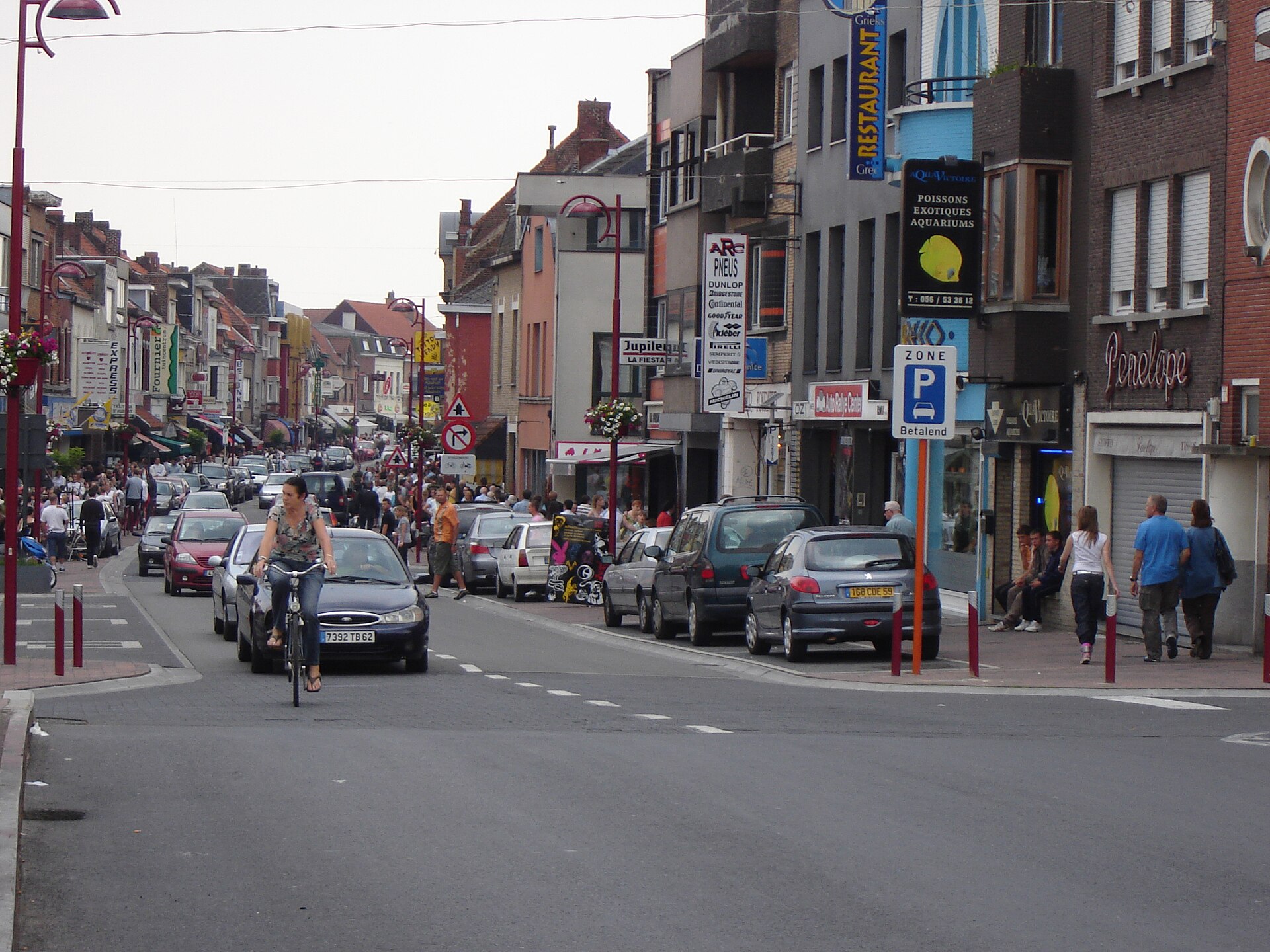
Photo of De Barakken in Menen by LimoWreck, CC BY 2.5, via Wikimedia Commons