Most of your website traffic leaves without a trace. Here's how to turn it into pipeline.
Think about what happens on your website every day. People read your pricing page. They watch a demo. They come back a second and third time. And almost all of them leave without filling in a form.
For most sales teams, that traffic is invisible. The visit happened, the interest was real, and nobody on the team ever knew. You spend the morning cold-prospecting accounts that have never heard of you, while companies that were on your pricing page yesterday go untouched.
That's the gap Website Visitors closes. Not by showing you a longer list of who showed up, but by telling you who's actually ready to buy.
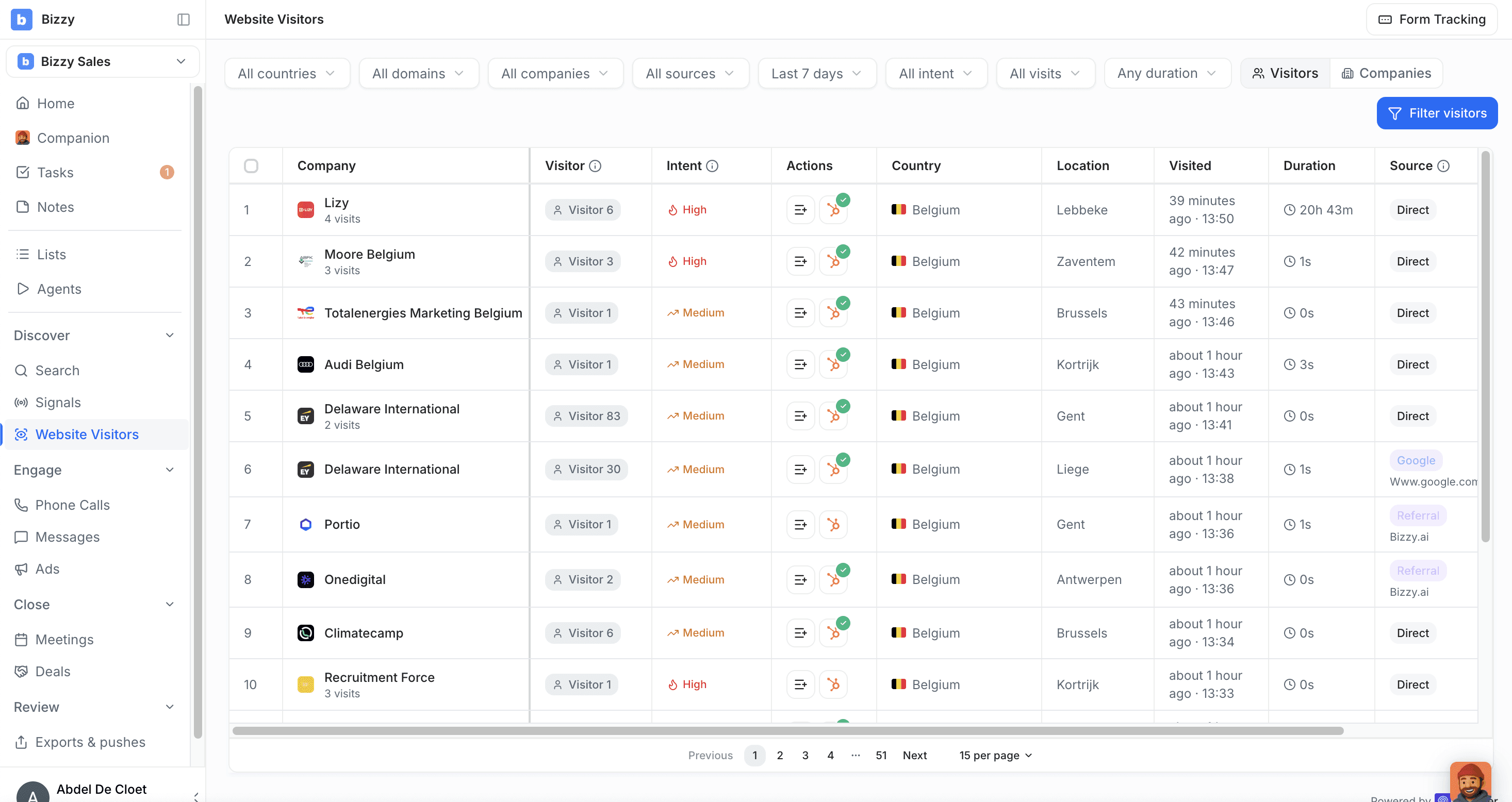
Knowing who visited isn't enough
Most visitor-tracking tools stop at identification. They resolve anonymous traffic to a company name and hand you a feed. That's a start, but it creates a new problem: now you have hundreds of company names and no idea which ones matter.
A rep can't call all of them. So the feed gets ignored, and you're back to where you started.
The useful question was never "who visited." It's "who's worth a call today." That takes more than a name. It takes intent.
Scoring intent, not just counting visits
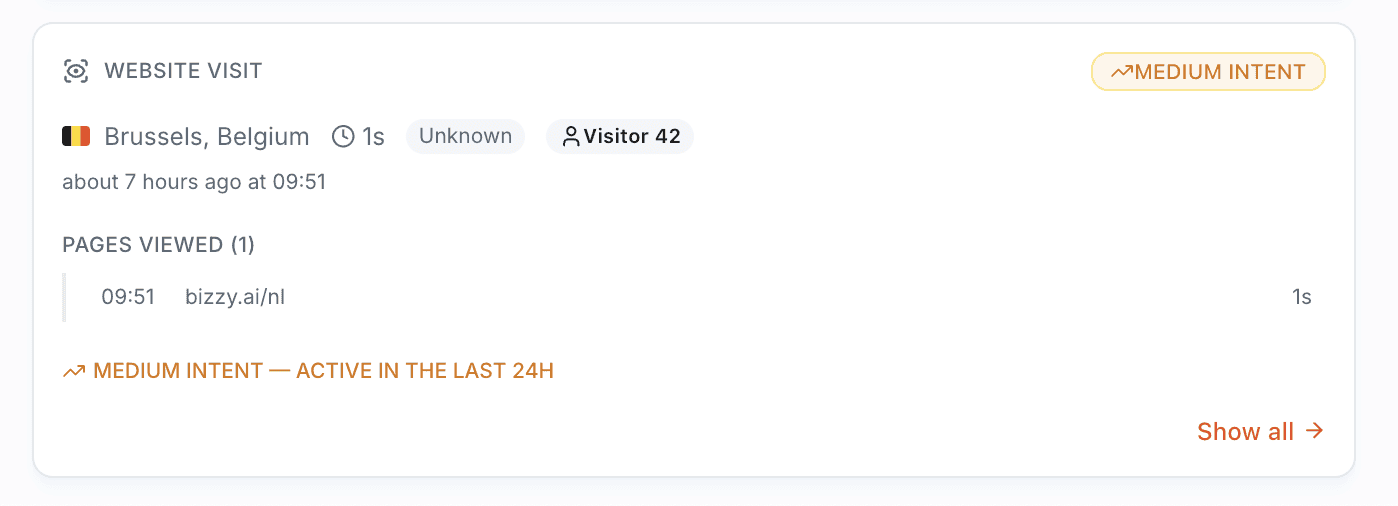
Bizzy scores every identified company on a 0 to 100 intent scale, then sorts them into four levels you can read at a glance: Very high, High, Medium, and Low.
The score reflects how a company actually behaves, not just whether it stopped by:
How often it returns
How recently it was active
Whether it visits the pages that signal buying intent, like pricing, demo, and contact
You decide which pages count most. Mark your high-value pages and visits to them weigh more heavily in the score, so a company circling your pricing page ranks higher than one that read a single blog post and left.
Every score tells you why
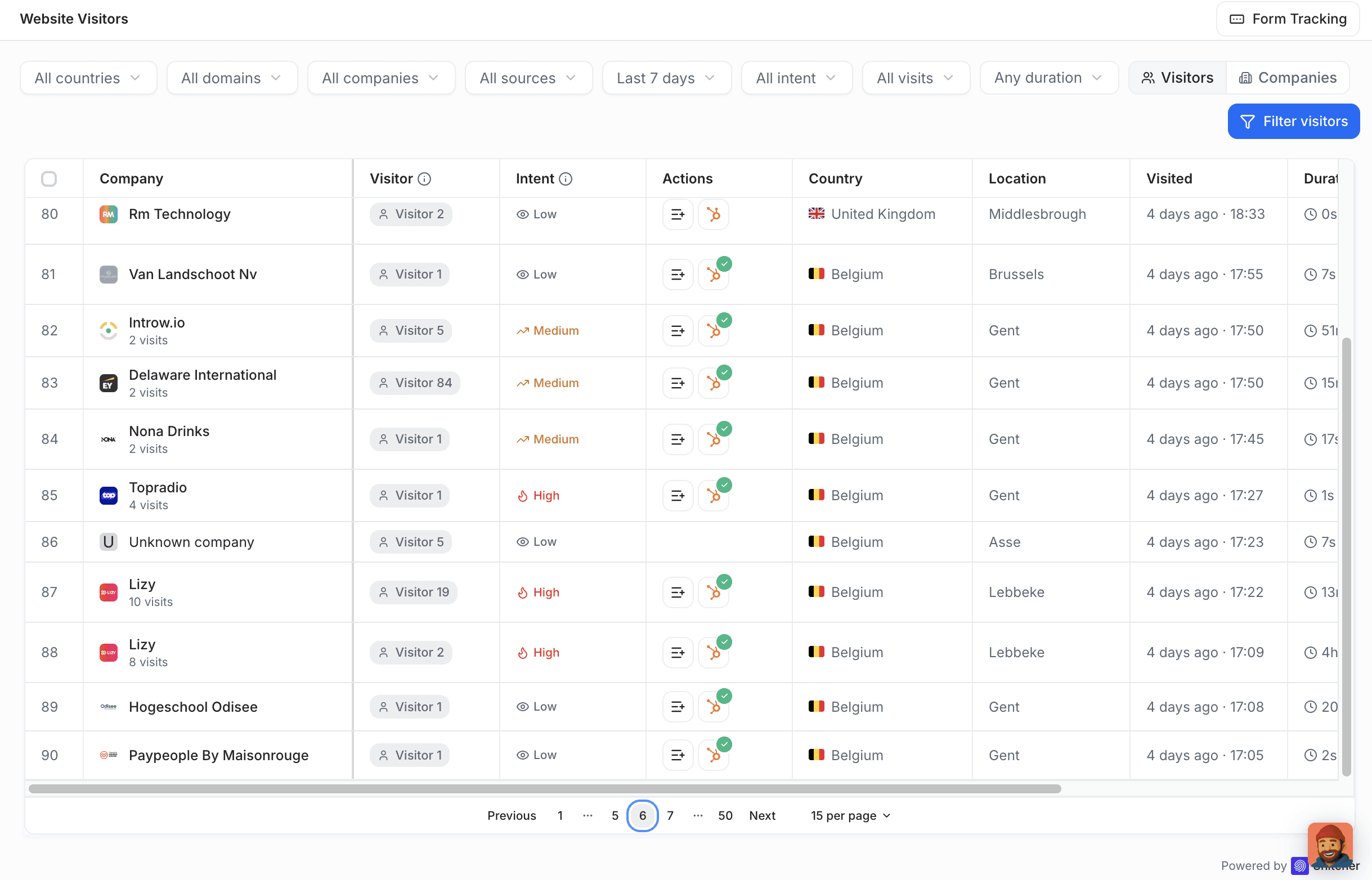
A number on its own is easy to distrust. So every intent level comes with a plain-English reason: "Visited pricing & demo." "Returned after 3 weeks." "3 sessions this week."
Reps don't have to reverse-engineer a black box. They see the badge, read the reason, and know exactly why an account is hot before they reach out. That context also makes the outreach better. "You spent time on our pricing page twice last week" beats a generic opener every time.
The hot ones become tasks, automatically
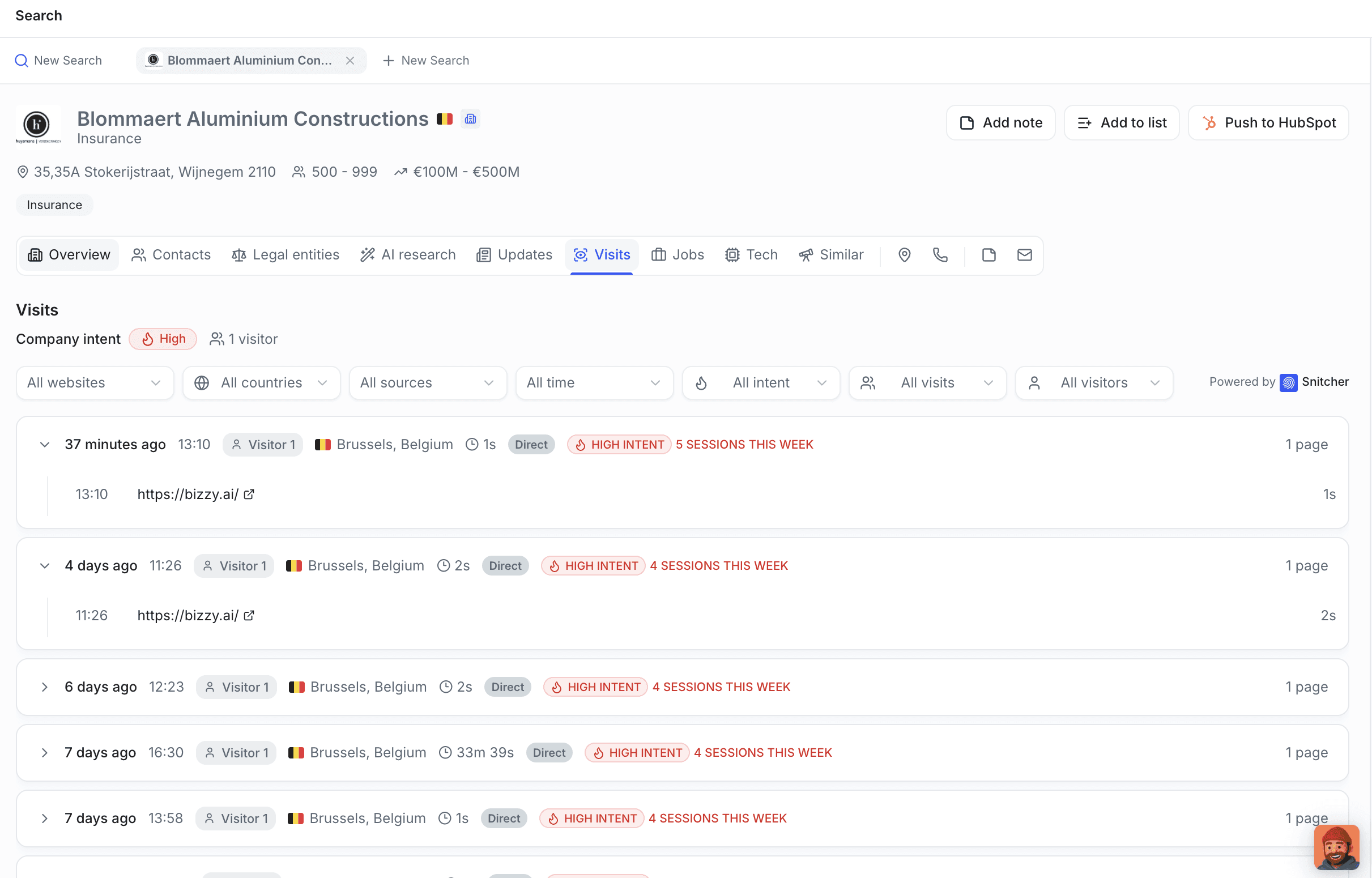
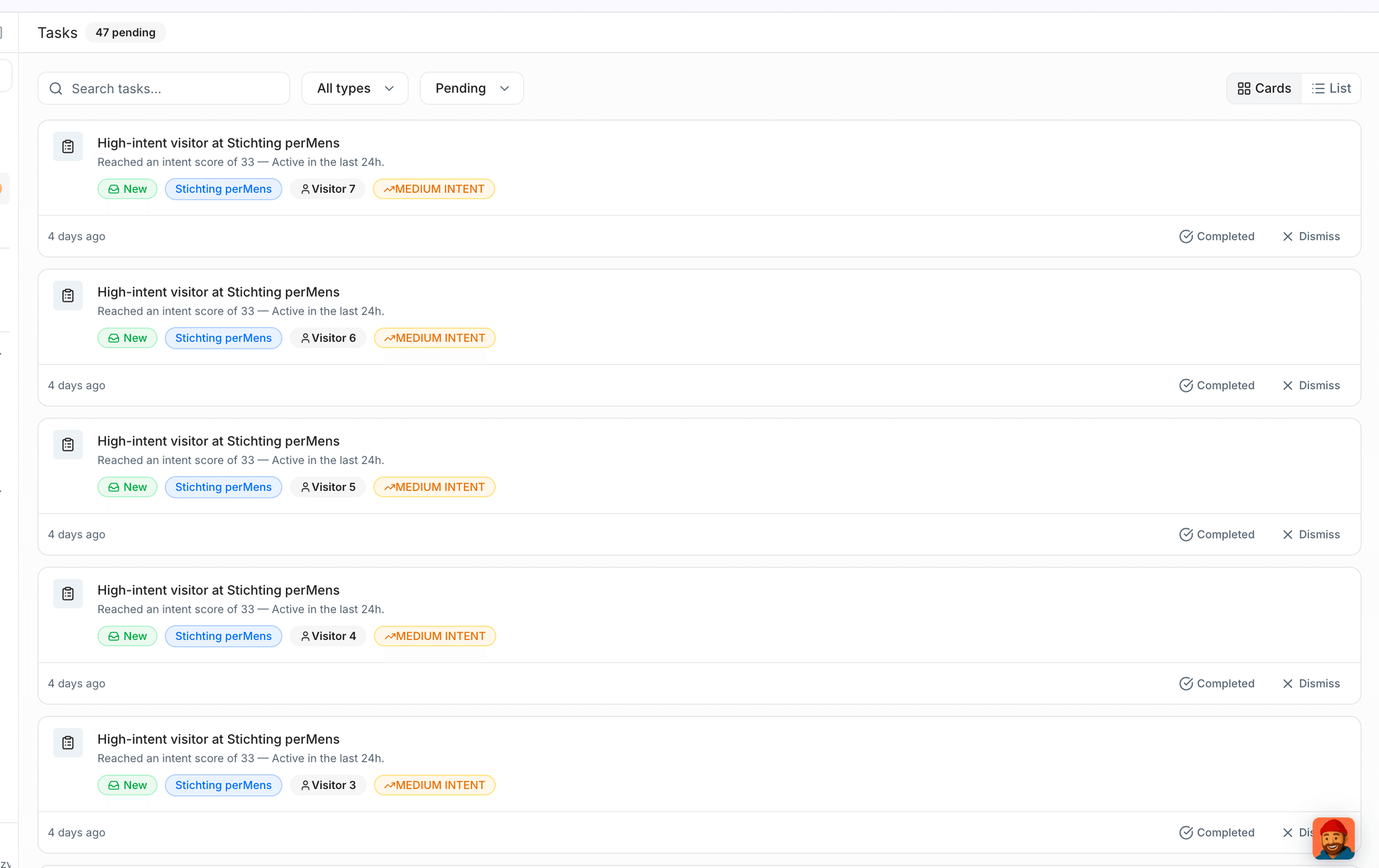
Here's where it stops being a dashboard you have to remember to check. Set an intent threshold, and when a company crosses it, Bizzy creates a task and routes it to the right rep. The signal turns into an action without anyone watching a feed.
That's the difference between intent data that sits in a tab and intent data that books meetings. Recency is what triggers the move: a hot account back on your pricing page today is worth a same-day reach-out, and now your team actually gets the nudge to make it.
Built for how sales actually thinks
Reps think in accounts, not page views. So Website Visitors groups everything by company: one row per account, its latest activity up top, and the rest of its sessions in the sidebar. When three people from the same company are poking around your site, you see a buying committee forming, not three disconnected log entries.
Visitor count tells you how many people at an account are looking. Visit intensity tells you how serious they are. Together they tell you whether it's time to engage. And when you want the granular timeline, the session-by-session view is still there.
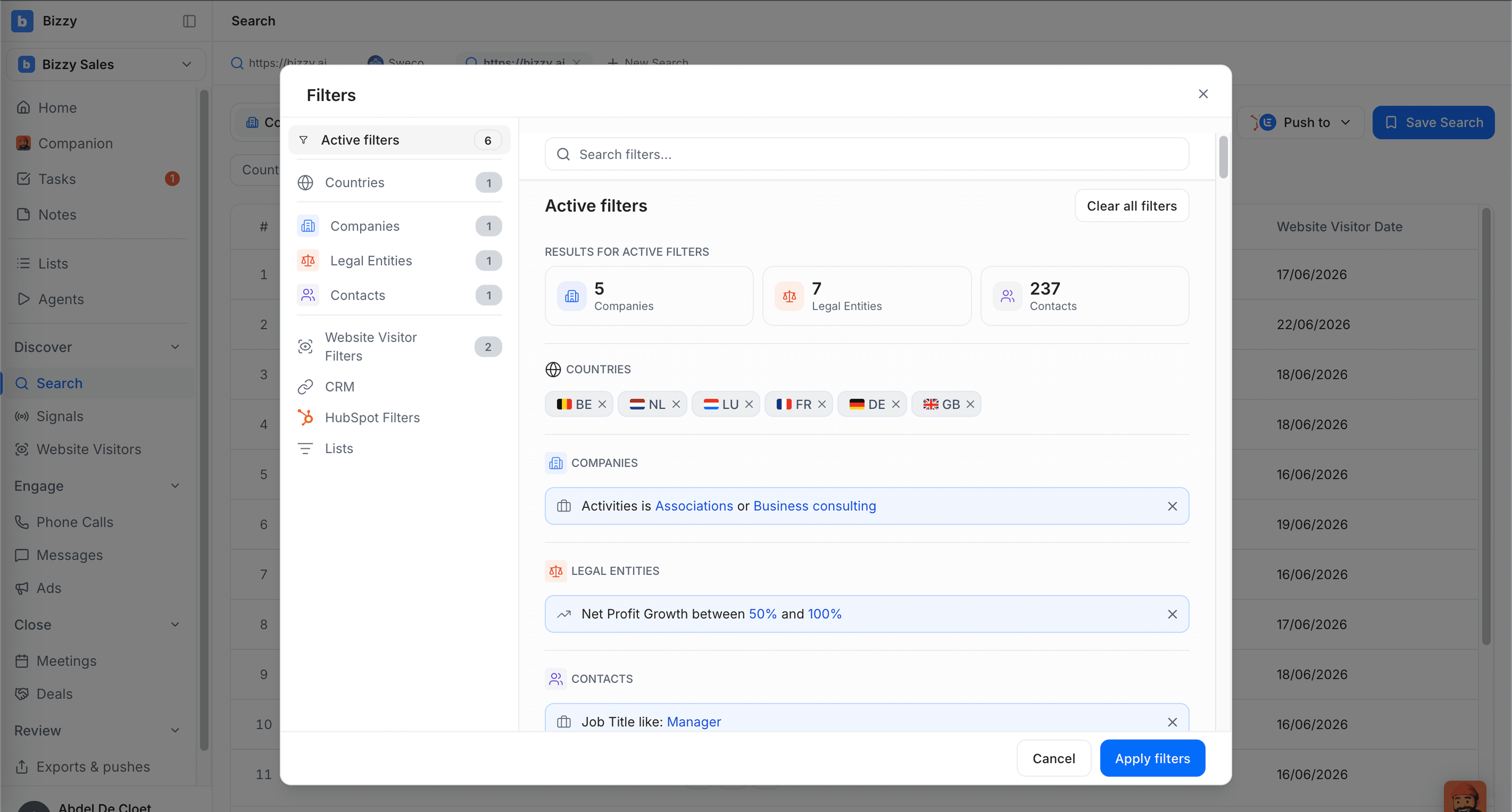
You can filter the whole thing by intent level, returning visitors, source, country, domain, company, or time range, and save those filters as reusable searches for the segments you care about.
A note on what we don't claim
Website Visitors identifies the company and counts the distinct visitors from it. It does not pretend to name the individual person behind a visit. We'd rather be honest about that than present a guess as fact. What you get is reliable, registry-sourced European company data and a clear read on intent, which is what you need to decide who to call. Anonymous and identified tracking are kept clearly separate, and cookie consent is respected by design.
What good looks like
When this works, it stops being analytics and becomes a daily prioritization engine. The teams getting the most out of it see a meaningful share of their visitors turn actionable and a real slice of pipeline influenced by visitor intent. The rep's morning changes: instead of a blank screen, they start the day with a short list of companies that were just on the site, ranked by how ready they are, each with a reason and a task already waiting.
That's the point. Your website is already telling you who's interested. Website Visitors just makes sure your team hears it in time to do something about it.
Test out the website visitor tracker, here.